

Last Updated: October 25, 2026
Quick Summary
Emergency electrical repair demands immediate attention when you notice burning smells, sparks, hot outlets, or repeated breaker trips. Stop using the affected circuit, turn off the breaker if safe, and call a licensed electrician right away to prevent fire hazards and injury.
- Burning smells, sparks, scorch marks, and hot outlets are signs of emergency electrical repair situations requiring immediate professional help.
- Turn off the breaker serving the affected area if you can do so safely, but never touch a wet, sparking, or hot electrical panel.
- A single tripped breaker that resets cleanly is usually not an emergency, but one that trips repeatedly within hours signals a fault needing professional diagnosis.
- Emergency electrical repair costs typically include a service-call fee, diagnostic charge, after-hours premium, labor rate, and parts markup.
- Ask for a written estimate separating diagnostic, labor, parts, and permit fees before approving any emergency electrical repair work.
Table of Contents
- Recognize When You Have an Emergency Electrical Repair Situation
- What to Do Before an Electrician Arrives
- Dealing With a Tripping Circuit Breaker: When to Call an Electrician
- Electrical Burning Smell at an Outlet: Safety and Next Steps
- Understanding Emergency Electrician Cost and Finding 24-Hour Service
- Getting Help From a Licensed 24-Hour Electrician in Your Area
- Frequently Asked Questions
Recognize When You Have an Emergency Electrical Repair Situation
An emergency electrical repair situation demands immediate attention.
A single tripped breaker might reset fine, but one that trips repeatedly within hours, or a burning plastic smell near your panel, signals a potential fire hazard.
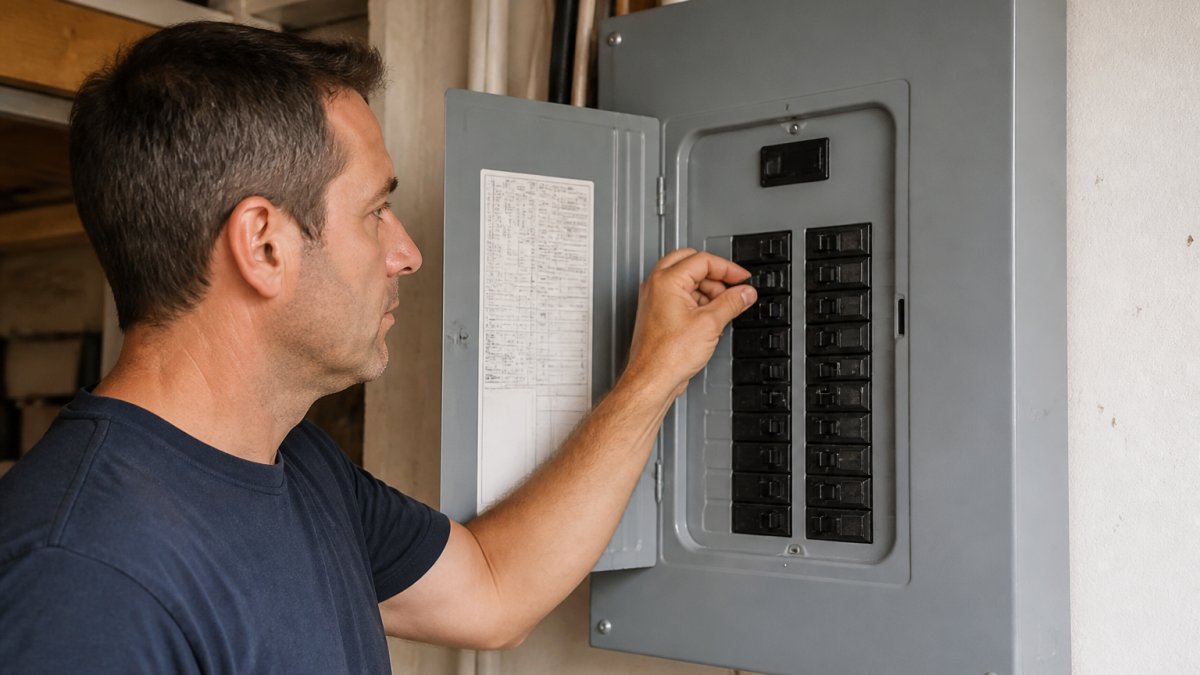
Faulty wiring, overloaded circuits, and damaged outlets cause thousands of residential fires annually.
What to Do Before an Electrician Arrives
Your actions in the first few minutes matter. While waiting for a licensed electrician, take these steps to protect your home and family.
If you see flames, heavy smoke, or someone has been shocked and is unresponsive, call 911 first. Do not re-enter the area until firefighters clear it.
Step 1: Stop using the affected circuit
Unplug appliances on the affected circuit and stop using the outlet or switch. Do not troubleshoot further or plug anything else in. If the problem involves an entire room or your main panel, avoid using electrical appliances there until a professional inspects the system.
Step 2: Shut off the right breaker, if you can do so safely
Locate your electrical panel and flip the breaker serving the affected area to OFF; if you can’t identify it, turn off the main breaker. Never stand in water or touch a panel that is wet, sparking, or hot. If the panel is smoking or scorched, leave the area and call for help.
Step 3: Triage by symptom
Use this symptom guide to decide how urgently to act:
| Symptom | Immediate action | Urgency |
|---|---|---|
| Burning smell from an outlet or panel | Stop using the circuit, turn off breaker if safe, call an electrician | Emergency, same call |
| Sparks or visible scorch marks | Turn off breaker if safe; evacuate if smoke or flames appear | Emergency, same call |
| Outlet or switch hot to the touch | Stop using it, turn off breaker, call an electrician | Emergency, same call |
| Repeated breaker trips (same breaker) | Unplug devices, reset once, call if it trips again | Urgent, within hours |
| Partial outage (one room or circuit dead) | Check the panel for a tripped breaker; call if it will not reset | Urgent, same day |
| Flickering lights throughout the home | Turn off main breaker if lights dim/brighten dramatically; call | Urgent, same day |
| Whole-home outage while neighbors have power | Check main breaker; call if it will not reset | Urgent, within 30 minutes |
| Whole-home outage and neighbors are also out | Call your utility first | Utility issue, not an electrician |
Step 4: Keep people and pets clear
Move everyone away from the affected area. Never use water on an electrical fire. If a Class C extinguisher is available and the fire is small and contained, use it from a safe distance; otherwise evacuate and call 911.
Step 5: Document what you observed
Note when the problem started, what you smelled or saw, which outlets or appliances were involved, and whether the issue is ongoing or intermittent. This helps your electrician diagnose faster and gives you a record for insurance.
Step 6: Have your details ready when you call
Provide your address, a clear description of the symptom, and whether power is out to the whole home or one area. Say “I smell burning from my kitchen outlet” rather than “something’s wrong with my electricity”, the more specific you are, the better prepared the technician will be.
When in doubt, treat a burning smell, sparks, or a hot outlet as an emergency. A tripped breaker that resets cleanly is usually a nuisance; one that trips repeatedly is a fault that needs a licensed electrician.
Dealing With a Tripping Circuit Breaker: When to Call an Electrician
A tripping circuit breaker is your home’s safety mechanism at work, but repeated trips signal trouble. One trip might mean too many devices at once; multiple trips in a short period mean something is wrong.
If your breaker trips once and resets normally, unplug one or two devices and try again. You can learn about related electrical problems and when DIY troubleshooting is appropriate. But if the same breaker trips repeatedly, or trips even when you’re not using many appliances, call a licensed electrician, this suggests a short circuit, a ground fault, or a failing breaker.
Watch for a breaker that trips within minutes of resetting, one that won’t stay in the ON position, burning smells near the panel, or scorch marks on the breaker or wires.
Electrical Burning Smell at an Outlet: Safety and Next Steps
An electrical burning smell at an outlet is a red flag, never ignore it. The odor typically comes from overheated wires, damaged insulation, or an internal component failure.
Stop using that outlet immediately and plug nothing else into it, assume it’s unsafe until proven otherwise.
If the smell is strong or accompanied by scorch marks, smoke, or sparks, evacuate your home and call emergency services.
Understanding Emergency Electrician Cost and Finding 24-Hour Service
When you need emergency electrical repair services, cost is a legitimate concern, but it shouldn’t delay you from calling. Emergency repairs typically cost more than routine daytime service due to after-hours response and urgency, understanding how the bill is built lets you compare quotes fairly.
How an emergency electrical bill is typically structured
Most licensed electricians build an emergency bill from a few standard components. Ask about each before work begins:
- Service-call or trip fee. A flat charge to send a technician to your address, often collected whether or not you approve the repair. This covers dispatch and travel.
- Diagnostic fee. A charge to troubleshoot and identify the fault. Some companies waive or credit this fee if you proceed with the repair; ask which policy applies.
- After-hours premium. Calls placed outside normal business hours, evenings, weekends, and holidays, commonly carry a higher labor rate or a separate after-hours surcharge. Ask what hours count as after-hours and what the premium is.
What drives the final price up or down
A simple breaker reset or outlet replacement costs far less than tracing a fault behind drywall, rewiring a damaged circuit, or replacing a failed panel. The biggest cost variables are:
- Time of day. A 2 a.m. call usually costs more than a 2 p.m. call.
- Diagnosis difficulty. Intermittent faults that require tracing take longer than obvious failures.
- Access. A fault behind finished walls, in a crawlspace, or in an attic adds labor.
Ask for the service-call fee, the after-hours premium, the diagnostic charge, and the minimum job charge before you approve any work. A reputable company will give you these numbers up front and put the estimate in writing.
Getting a transparent estimate
Before work begins, ask for a written estimate that separates the diagnostic charge, labor, parts, and any permit fees. If the technician finds additional problems, they should stop and get your approval before doing more work. Keep the itemized invoice after the job.
Finding 24-hour service
Most licensed electricians in the area offer 24-hour emergency response, though availability varies. When you call, ask:
- Are technicians available now, and what is the estimated arrival window?
- Is the technician a licensed employee or a subcontractor?
- What is the service-call fee and after-hours premium?
When comparing options, look for fully licensed and insured technicians, realistic response windows, transparent pricing up front, and around-the-clock availability. Don’t choose on price alone, a bargain electrician who causes more damage isn’t a savings.
Getting Help From a Licensed 24-Hour Electrician in Your Area
Finding a reliable licensed electrician for emergency service is critical.
Be specific when you call.
Progressive Electric LV provides emergency electrical repair services with fully licensed technicians available for urgent calls. You can contact Progressive Electric LV to request emergency electrical repair service when you need immediate help.
Ask about licensing and insurance before work begins.
After the repair, ask for a detailed invoice explaining what was repaired, what parts were replaced, and what each charge covers.
Electrical emergencies create stress and uncertainty, but knowing what to do buys you time and safety while help arrives.
| Electrical Emergency | What to Do | When to Call |
|---|---|---|
| Burning smell from outlet | Turn off breaker, stop using outlet | Immediately |
| Tripping breaker (repeated) | Turn off breaker, unplug devices | Within hours |
| Flickering lights throughout home | Turn off main breaker if unsafe | Same day or immediately |
| Sparks or visible scorch marks | Evacuate if severe, turn off breaker | Immediately |
| Loss of power to entire home | Check main breaker, check with neighbors | Within 30 minutes if outage is localized |
Frequently Asked Questions
What counts as an electrical emergency that requires immediate help?
An emergency electrical repair situation includes sparks or smoke from outlets, burning smells near wiring or the electrical panel, complete loss of power to your home, exposed wiring, frequent circuit breaker trips, flickering lights throughout multiple rooms, or any electrical hazard that poses an immediate fire or shock risk. If you’re unsure, contact a licensed electrician to assess the situation rather than risk injury or property damage.
What should I do if I smell burning near an outlet or electrical panel?
An electrical burning smell at an outlet or panel is a serious warning sign. Immediately stop using that outlet, turn off the circuit breaker serving that area if you can do so safely, and leave the area. Do not attempt repairs yourself. Call a licensed electrician right away. Do not use water on an electrical fire; use a Class C fire extinguisher if safe to do so, or evacuate and call 911.
How much does emergency electrician cost for urgent repairs?
Emergency electrician cost varies based on the type of repair, time of day, and complexity of the work. Most providers charge a service call fee plus hourly labor rates, with after-hours and weekend calls typically costing more than standard business hours. For accurate emergency electrician cost information and a quote for your specific situation, contact a licensed local provider directly.
Can I reset a circuit breaker that keeps tripping?
You can safely reset a tripping circuit breaker once by switching it fully off and back on. However, if a circuit breaker keeps tripping repeatedly, do not keep resetting it. This signals an underlying electrical fault that requires professional diagnosis. A tripping circuit breaker electrician can inspect your system to identify whether the issue is an overloaded circuit, a short circuit, or a faulty breaker that needs replacement.
