

Last Updated: October 24, 2026
Quick Summary
To fix flickering lights at home safely, start by turning off the switch, letting the bulb cool, and reseating or swapping in a known good bulb. If flickering lights continue, check the dimmer for LED compatibility, then stop and call a licensed electrician if you smell burning, see scorch marks, or the flicker affects the whole house.
- Stop and call a licensed electrician if you smell burning, see scorch marks, or hear buzzing or crackling.
- The most common cause of LED flicker is a mismatch between the bulb and the dimmer.
- A flicker that follows the bulb means the bulb is failing; one that stays with the fixture points to socket or wiring.
- A typical troubleshooting call runs 60 to 90 minutes and costs $100 to $250.
- Ask whether the diagnostic fee is credited toward the repair before booking the visit.
Table of Contents
- Start With a Safety Check Before You Touch Anything
- How to Fix Flickering LED Lights Step by Step
- Flickering Lights in One Room: Isolating the Cause
- Can a Bad Breaker Cause Flickering Lights?
- Why Lights Flicker When Appliances Turn On
- Loose Wiring, Corrosion, and Other Hidden Causes
- What a Licensed Electrician Checks and How to Book One
- Frequently Asked Questions
Start With a Safety Check Before You Touch Anything
Flickering lights are one of the most common electrical complaints in any home, and most of the time the cause is harmless.
Watch out: electricity can kill.
Here is the short version. If any of these are true, stop and call a licensed electrician:
- You smell burning or see scorch marks near an outlet or switch
- The lights flicker along with a buzzing or crackling sound
- A breaker trips again right after you reset it
electrical safety guidance for homeowners is clear on one point: flickering combined with heat, smell, or sound points to a real fire risk.
If none of those apply, you can safely start with the simple checks below.
Warning Signs That Mean Stop and Call an Electrician
Some symptoms point to a problem you should not fix yourself. A licensed electrician should handle:
- Any flicker that comes with a burning smell
- Scorch marks, melted plastic, or discolored outlets
- Repeated breaker trips on the same circuit
These are signs of a loose connection, a failing breaker, or damaged wiring behind the wall. Those are not DIY jobs.
How to Fix Flickering LED Lights Step by Step
LED lights flicker for different reasons than older bulbs, and the fix is usually simple. Work through these steps in order. Most people solve the problem in the first two.
- Turn off the switch and let the bulb cool.
- Remove the bulb and check the base for corrosion or dark marks.
- Seat the bulb firmly back in the socket. A loose bulb causes a poor connection and a flicker.
- Swap in a known good bulb from another fixture. If the flicker stops, the old bulb was worn out.
- Check the dimmer if one is installed. Many LEDs are non-dimmable and will flicker on a dimmer circuit.
- Test the switch by turning it fully on and off a few times. A worn switch can cause an intermittent connection.
- Try a different fixture on the same circuit. If that one flickers too, the problem is in the wiring, not the bulb.
If you are shopping for replacement bulbs or a compatible dimmer, browsing lighting options helps you match the right bulb type to your fixture before you buy.
Check the Bulb, Socket, and Dimmer Compatibility
The most common cause of LED flicker is a mismatch between the bulb and the dimmer. Older dimmer switches were built for incandescent bulbs. LEDs draw far less power, so the dimmer cannot regulate them smoothly. The result is a visible flicker, especially at low settings.
Here is what to check:
- Bulb type: Confirm the bulb is dimmable. The packaging will say so.
- Dimmer rating: Look for a dimmer rated for LED loads.
- Socket condition: Look for corrosion, dark spots, or a loose fit.
A common mistake is replacing the bulb without checking the dimmer. If the dimmer is the problem, a new bulb will flicker too.
Flickering Lights in One Room: Isolating the Cause
When flickering stays in one room, the cause is almost always local to that circuit or fixture. The fastest way to find it is to match the pattern you see to the likely cause, then work from the cheapest, safest check outward. Use this symptom map before you touch anything.
Symptom-to-Cause Map
| What you see | Most likely cause | First safe step |
|---|---|---|
| One bulb flickers, others in the same fixture are steady | Loose bulb, worn bulb, or corroded socket | Turn off the switch, let it cool, reseat the bulb, then swap in a known-good bulb |
| Every bulb in one fixture flickers together | Fixture wiring, socket contacts, or a dimmer on that fixture | Test the fixture on a different circuit with a known-good bulb |
| All lights in one room flicker, other rooms are steady | Loose connection on that room’s circuit, a worn switch, or a shared neutral | Identify the breaker, then check switch and fixture connections you can safely reach |
| Flicker in one room only when a specific appliance runs | Appliance load on a shared circuit | Note which appliance triggers it and whether the flicker stops when it is off |
| Flicker moves between rooms on different breakers | Panel, service line, or main neutral issue | Stop DIY checks and call a licensed electrician |
| Whole-house flicker with no pattern | Utility supply, main breaker, or service entrance | Stop and call a licensed electrician and, if widespread, your utility |
Isolate the Fixture First
Start at the smallest unit. Turn the switch off and let the bulb cool. Remove it and look at the base and the socket for dark marks, corrosion, or a loose fit. Reseat the bulb until snug, not forced. If the flicker continues, swap in a bulb you know works in another fixture. A flicker that follows the bulb means the bulb is failing; a flicker that stays with the fixture means the problem is in the socket, the wiring at the fixture, or the switch.
Isolate the Circuit Second
If the fixture checks out, map what shares the breaker. Flip the breaker off and confirm which outlets and fixtures go dark. Then ask three questions:
- Does the flicker happen only when one appliance on that circuit runs?
- Does it happen at all hours, or only at certain times of day?
- Does it stop when you turn the switch fully on rather than partway?
A flicker tied to one appliance points to load on a shared circuit. A flicker tied to a partway switch position points to a worn switch or a dimmer mismatch. A flicker that happens at random times on a circuit with no obvious trigger points to a loose connection somewhere between the panel and the room.
Do not open a breaker panel cover or pull a fixture down to inspect wiring behind the wall. Those checks belong to a licensed electrician. If the fixture and bulb checks do not solve it, stop and book a visit.
When One-Room Flicker Is Actually a Whole-House Problem
A flicker that starts in one room but spreads to others on different breakers is not a room problem. It points to the panel, the main neutral, or the service line. The same is true if lights in one room dim sharply whenever a large appliance elsewhere in the house starts. In both cases, the safe next step is to stop troubleshooting and call a licensed electrician, who can test the service and the panel safely.
Can a Bad Breaker Cause Flickering Lights?
Yes. A failing breaker is a real and fairly common cause of flickering lights. The breaker is the switch that protects each circuit.
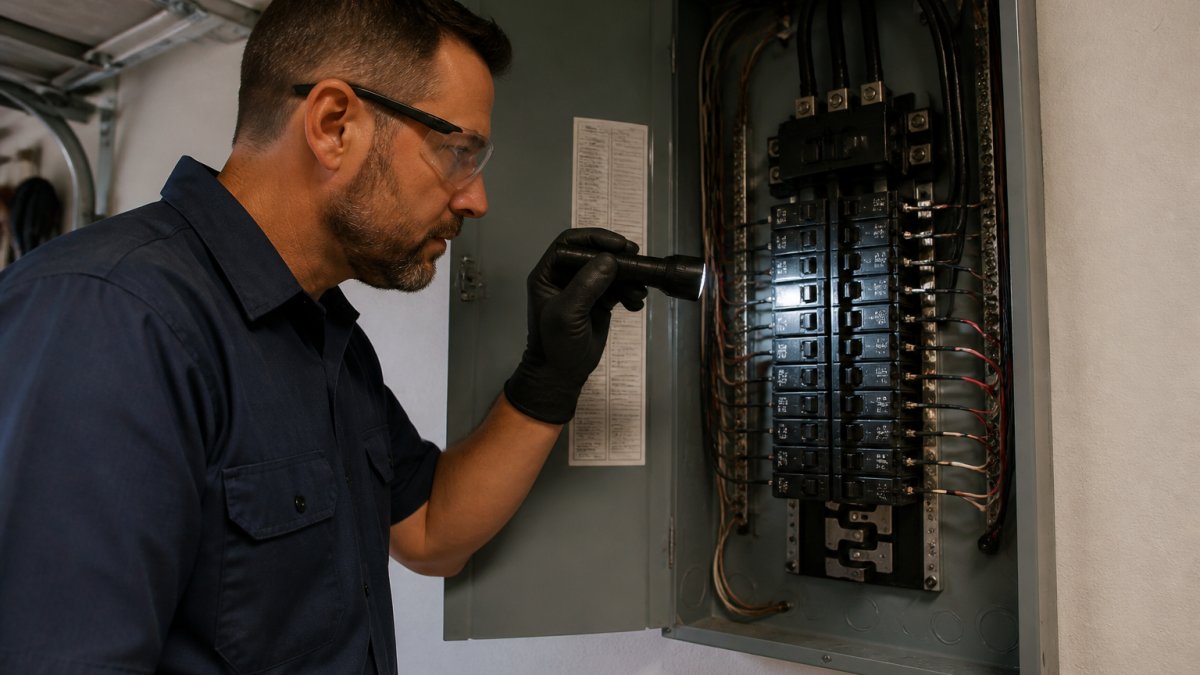
Signs that a breaker is the culprit:
- The flicker affects every light on one circuit
- The breaker feels warm or smells faintly of plastic
- The breaker trips without an obvious overload
- The flicker started after a storm or a power surge
A loose breaker connection inside the panel is a fire risk. Do not open the panel yourself. If the panel is old or undersized, a panel upgrade may be the right fix.
Why Lights Flicker When Appliances Turn On
Lights that dim or flicker when the AC, dryer, or microwave kicks on are showing you a voltage change. Large appliances pull a surge of current when they start. That brief draw can drop the voltage on the circuit for a split second, and the lights react.
This is often normal. A small, brief dim is nothing to worry about. The problem starts when the flicker is severe, lasts, or happens across the whole house.
Appliance Load Versus a Wiring Fault
The difference matters. Here is how to tell them apart:
- Appliance load: The flicker is brief, matches the appliance starting, and stops once it is running. This is normal.
- Wiring fault: The flicker is strong, lasts, or happens even when the appliance is off. This points to a loose neutral, a bad connection, or an overloaded circuit.
A quick test: turn off the appliance and watch the lights. If the flicker stops, it was load. If it continues, the wiring is the problem.
An overloaded circuit is another common cause. Too many devices on one breaker cause voltage to sag. The fix is to spread the load or add a dedicated circuit.
Loose Wiring, Corrosion, and Other Hidden Causes
Some causes sit out of sight. Loose wiring at a fixture, a backstabbed outlet, or corrosion on a wire nut can all cause a flicker.
common causes of flickering lights and their solutions lists loose bulbs, old dimmers, voltage changes, and overloaded circuits among the usual suspects.
Other hidden causes include:
- Corroded connections inside a fixture
- A worn-out switch
- Damaged wire insulation from heat or age
- A loose ground wire
Do not ignore a flicker that comes and goes for weeks. Intermittent faults are often the ones that turn into bigger problems.
What a Licensed Electrician Checks and How to Book One
When the bulb, dimmer, and fixture checks do not solve the flicker, a licensed electrician traces the problem from the panel to the fixture. Knowing what that visit involves helps you judge quotes and avoid surprises.
What the Diagnostic Visit Usually Covers
A typical troubleshooting call runs 60 to 90 minutes and generally includes:
- Panel inspection: Breaker torque, signs of heat, corrosion, and double-tapped or loose terminations.
- Circuit load check: Measuring actual load on the affected circuit and comparing it to the breaker rating.
- Connection checks: Switches, receptacles, fixtures, and any junction boxes on the circuit, looking for backstabbed connections, loose wire nuts, and heat damage.
- Neutral and ground verification: Testing for a loose or shared neutral, which is a common cause of whole-circuit flicker.
Ask the electrician to explain what was tested and what was ruled out. A good diagnosis names the cause, not just the symptom.
Common Repair Categories and Typical Cost Ranges
Actual prices vary by region, access, and the age of the wiring, but these ranges reflect common residential work in the United States:
| Repair | Typical range (USD) |
|---|---|
| Troubleshooting and diagnostic visit | $100 to $250 |
| Replace a standard switch or receptacle | $75 to $200 per device |
| Replace a dimmer with an LED-compatible model | $100 to $250 |
| Re-terminate a loose connection at a fixture or junction box | $150 to $350 |
| Replace a standard breaker | $150 to $350 |
| Add a dedicated circuit for a large appliance | $400 to $1,200 |
| Panel replacement or upgrade | $1,500 to $4,000+ |
These are planning ranges, not quotes. Get a written estimate that separates diagnosis from repair so you can compare bids on the same scope.
How to Book and What to Have Ready
Before you call, gather three things: the pattern of the flicker (which rooms, which times, which appliances), a photo of the affected fixture or panel if it is safe to take one, and the age of the home and panel if you know it. That information shortens the diagnostic visit and often reduces the bill.
Ask whether the diagnostic fee is credited toward the repair if you approve the work. Many shops apply it; some do not. Confirm before booking.
When to Escalate Immediately
Do not wait for a scheduled visit if you smell burning, see scorch marks, hear buzzing or crackling at a switch or outlet, feel a warm switch plate, or have a breaker that trips again right after reset.
If you have checked the bulb and the dimmer and the flicker is still there, it is time to bring in help. You can contact our team to request a visit or a quote.
Frequently Asked Questions
Is it safe to leave a flickering light bulb on?
A single flickering bulb is usually a loose or worn bulb and poses little risk, but turn it off and check the seating before leaving it. Flickering across several fixtures, buzzing, or a burning smell points to a loose connection or overloaded circuit, which is a fire risk. Switch the circuit off at the breaker and have a licensed electrician inspect it before using those lights again.
Can a bad breaker cause flickering lights?
Yes. A breaker with a worn connection or corrosion can interrupt current intermittently, and the flicker often affects every light on that circuit rather than one fixture. Other signs include a breaker that trips repeatedly or feels warm. Do not keep resetting it. A licensed electrician can test the breaker and the panel to confirm whether replacement is needed.
Why do my lights flicker when an appliance turns on?
Large appliances such as air conditioners, dryers, and refrigerators draw a surge of current at startup, which can briefly dim lights on the same circuit. A small, quick dim is normal. Flickering that lasts, spreads to other rooms, or happens with small appliances suggests loose wiring or an overloaded circuit, and an electrician should check the panel and connections.
When should I call an electrician about flickering lights?
Call a licensed electrician if flickering affects multiple rooms, comes with buzzing or a burning smell, follows a breaker trip, or started after storm damage or a renovation. Also call if you have already swapped bulbs and checked dimmer compatibility with no change. These patterns point to wiring or panel issues that need testing, not more bulb swaps.
Flickering lights are usually a small fix, but they can also be the first sign of a real hazard. Do not guess when the stakes are your home and your family’s safety. Get started with Progressive Electric LV and get a licensed electrician to trace the problem, confirm the cause, and make the repair. Call now to schedule your visit.
