

Last Updated: November 21, 2026
Quick Summary
Common electrical fire hazards in Las Vegas homes include overloaded outlets and extension cords, damaged or frayed cords, and worn wiring in older homes. Warning signs such as a warm outlet, a discolored faceplate, or a burning smell mean you should stop using the affected outlet or appliance and call a licensed electrician.
- Plug major appliances directly into wall outlets instead of using extension cords.
- Cords that are pinched, bent, or cracked can expose wire and spark.
- Older homes may have wiring that no longer handles modern electrical loads.
- Repeated breaker trips need inspection, not just a reset of the breaker.
- Schedule a home electrical safety inspection to find hidden hazards early.
Table of Contents
- What Causes Electrical Fires in Homes
- Electrical Fire Warning Signs to Act On Now
- Electrical Fire Prevention Tips and Safety Devices to Schedule With a Licensed Electrician
- Frequently Asked Questions
What Causes Electrical Fires in Homes
Home electrical fires often start with something small and easy to miss, and knowing the common electrical fire hazards helps you spot them early. Knowing what to look for is the first step to keeping your household safe.
Overloaded outlets and extension cords are a common cause. Plugging too many devices into one outlet or power strip generates heat. The U.S. Fire Administration advises against overloading outlets and recommends plugging major appliances directly into wall outlets instead of extension cords U.S. Fire Administration guidance on appliance and electrical safety.
Damaged or frayed cords and worn wiring also create risk. Cords that are pinched, bent, or cracked can expose wire and spark. Older homes may have wiring that no longer handles modern electrical loads.
Electrical Fire Warning Signs to Act On Now
Watch for warning signs of electrical fire hazards: a warm outlet, a discolored faceplate, or a burning smell all point to a problem. Learn more about signs of faulty house wiring to confirm what to look for. Do not wait for a fire to happen.
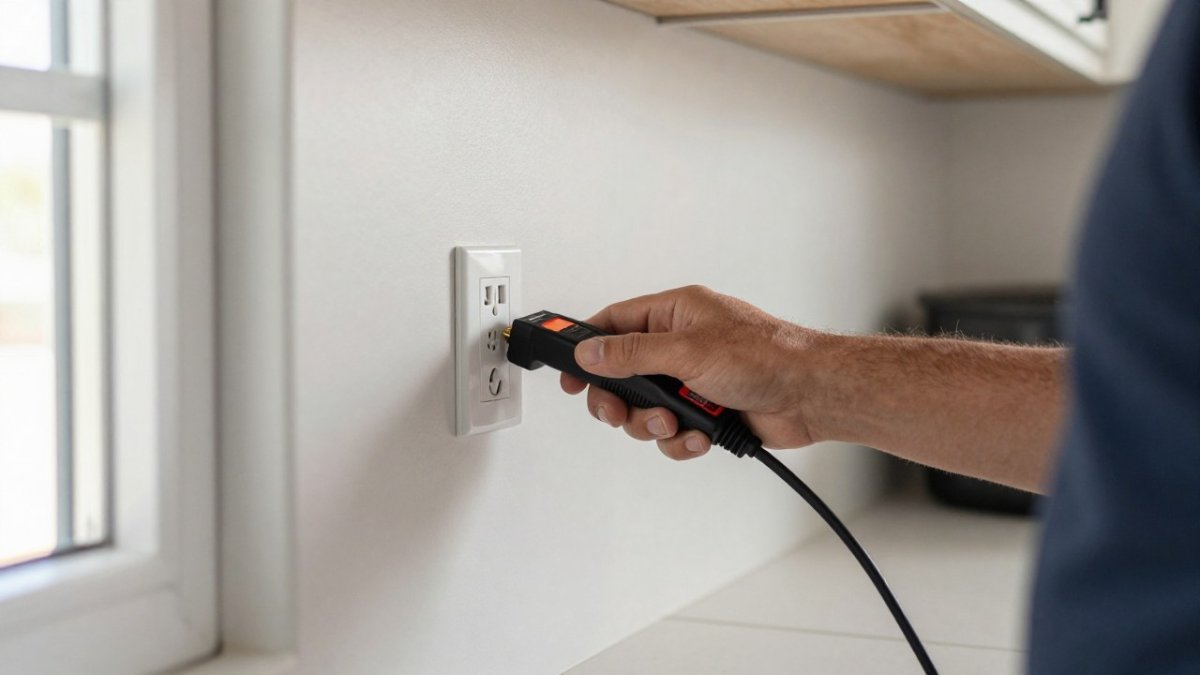
If you notice any of these signs, stop using the affected outlet or appliance and call a licensed electrician to inspect the wiring. Repeated breaker trips need attention, not a reset. Find out why a circuit breaker keeps tripping and what that means for your home.
The table below sums up the warning signs and the action to take for each.
| Warning sign | What it points to | What to do |
|---|---|---|
| Warm outlet | Heat from overload or loose connection | Stop using the outlet and call a licensed electrician |
| Discolored faceplate | Overheating at the connection | Stop using the outlet and call a licensed electrician |
| Burning smell | Possible electrical fault | Stop using the affected outlet or appliance |
| Repeated breaker trips | Circuit problem that needs inspection | Have it inspected, do not just reset the breaker |
Electrical Fire Prevention Tips and Safety Devices to Schedule With a Licensed Electrician
Simple habits lower your risk: unplug unused devices, avoid running cords under rugs, do not overload power strips, and keep cords away from heat and water.
Some fixes require a licensed electrician. A licensed electrician can review your home’s wiring and electrical panel, inspect for hazards, repair damaged wiring, and discuss protective devices suited to your home.
Consider scheduling a home electrical safety inspection to find hidden hazards before they cause harm. If problems persist, a whole house surge protector installation may be worth discussing.
If you are hiring someone, see our guide on hiring a licensed electrician in Las Vegas to learn what to check first.
Frequently Asked Questions
What causes electrical fires in homes?
Common causes include damaged or outdated wiring, overloaded outlets and circuits, loose connections, and frayed appliance cords. Extension cords used as permanent wiring and improper installation also raise the risk. Public safety guidance from the U.S. Fire Administration advises against overloading outlets and recommends plugging major appliances directly into wall outlets rather than into extension cords. Any warm outlet, flickering light or breaker that trips often should be checked by a licensed electrician.
What should I do if an outlet smells like it is burning?
Turn off the circuit at the breaker panel and unplug anything connected to that outlet. Do not keep using it. Call a licensed electrician to find the cause before restoring power. If you see flames or smoke, leave the area and call 911.
When should I have my home’s electrical system inspected?
Have a licensed electrician inspect your system if you notice warm outlets, frequent breaker trips, or flickering lights, or if your home is older and its wiring has not been checked. Inspection is also worth scheduling before adding major loads such as an EV charger or pool equipment. Call for current pricing.
