

Last Updated: November 4, 2026
Quick Summary
Start by checking whether one light, one circuit, or the whole house is affected, since that narrows the cause. Flickering lights are often linked to overloaded circuits, loose or faulty wiring, aging breakers, or panel problems. A breaker that keeps tripping is protecting the wiring from overheating and should be treated as a warning sign.
- Note whether one light, several lights, or the whole house is flickering.
- Check the bulb, fixture, and dimmer first, since incompatible dimmers often cause flicker with LEDs.
- Unplug or move heavy loads to see if repeated breaker trips stop.
- Stop using a circuit that trips repeatedly after heavy loads are removed, and book a licensed electrician.
- Never open the panel, replace a breaker, or work on live wiring yourself.
Table of Contents
- Flickering Lights and Tripping Breakers: When They Signal Trouble
- Step 1: Check Whether One Light, One Circuit, or the Whole House Is Affected
- Step 2: Inspect Bulbs, Fixtures, and Switches
- Step 3: Find Out Why the Breaker Keeps Tripping
- When to Stop DIY Troubleshooting and Call an Electrician Now
- Booking Your Electrical Inspection with Progressive Electric LV
- Frequently Asked Questions
Flickering Lights and Tripping Breakers: When They Signal Trouble
Flickering lights and a circuit breaker that keeps tripping are two of the most common electrical complaints homeowners report. These symptoms are usually worth taking seriously. Troubleshooting flickering lights and tripping breakers starts with noticing the pattern. Is it one light or the whole house? Does it happen when a large appliance turns on? The answers point you toward the cause.
Flickering lights are often linked to overloaded circuits, loose or faulty wiring, aging breakers, or problems at the electrical panel. To compare these symptoms, review the signs of faulty house wiring. A breaker that trips is doing its job. It shuts power off to protect the wiring from overheating. Repeated trips are a signal, not a nuisance.
Below, we walk through a simple, safety-first process you can follow at home. You will learn how to narrow down the problem, what to check on bulbs and switches, and when to stop and call a licensed electrician.
Step 1: Check Whether One Light, One Circuit, or the Whole House Is Affected
Start by finding out how wide the problem is. This one step tells you a lot about where to look next: observe first, narrow the scope, then decide whether the next move is a bulb change, a breaker reset, or a call to a licensed electrician. For help choosing that next move, see our troubleshooting service overview.
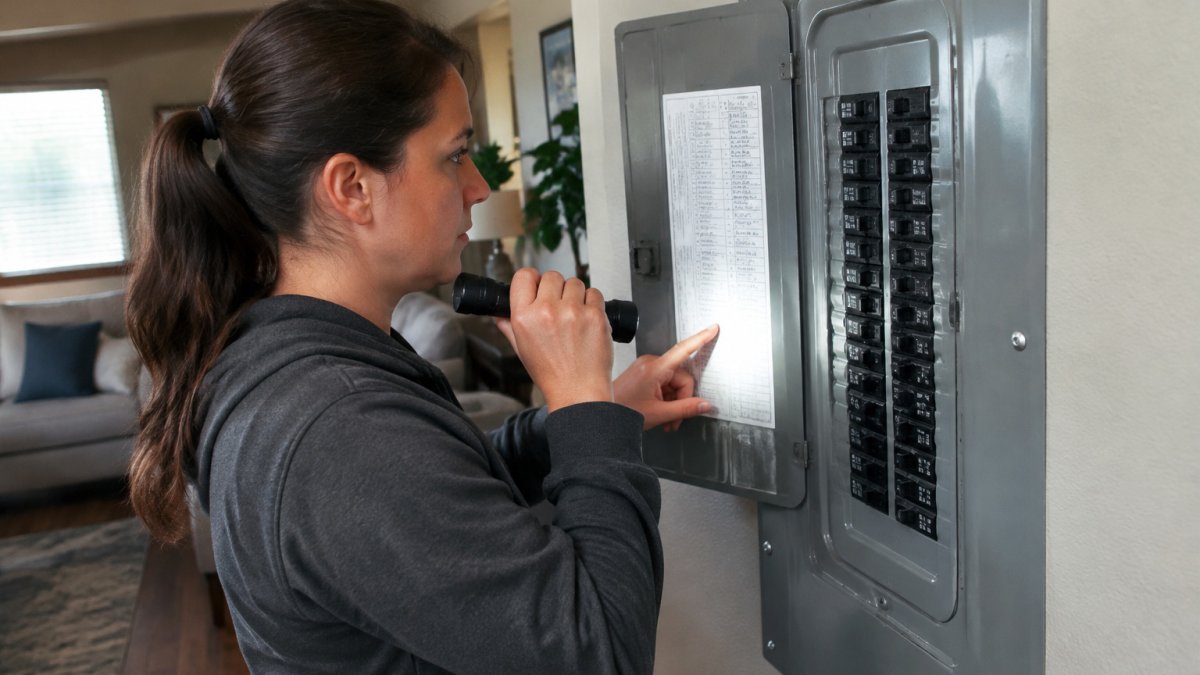
Work through these questions in order and write down the answers:
- Is only one light flickering, or several in the same room?
- Do lights in multiple rooms dim or brighten together?
- Does the problem happen only when a specific appliance runs?
- Does the breaker trip on one circuit, or does the whole panel shut off?
- Is the flicker steady, random, or tied to a time of day?
A single flickering light usually points to the bulb, fixture, or switch. Several lights on one circuit suggest a circuit problem. Lights across multiple rooms dimming or brightening together can signal a larger issue, such as a loose neutral connection, a failing service connection, or a problem on the utility side.
A common pattern is a light that flickers only when a large appliance starts. That points to appliance startup load or a shared circuit rather than a failing bulb. If the flicker follows the appliance from room to room, the appliance or its circuit is the likely source.
You can safely check the panel labels to see which breaker controls the affected lights, and you can turn a known load on and off to watch whether the lights react. That is the safe limit of DIY troubleshooting at this stage.
Watch out: if lights brighten and dim across multiple rooms at the same time, or if some rooms go bright while others go dim, stop using the circuit and call a licensed electrician. Widespread or unusually bright-and-dim fluctuations can indicate a service or neutral problem, and that is not a condition to troubleshoot from the panel yourself.
Keep a simple log as you go: date, time, which lights flickered, what was running, and which breaker tripped. That record turns a vague complaint into a symptom pattern an electrician can act on quickly.
Step 2: Inspect Bulbs, Fixtures, and Switches
Many flickering problems are simple. Check the easy items before assuming the wiring is at fault.
- Bulb: Make sure it is screwed in tightly and rated for the fixture. Try a new bulb.
- Fixture: Look for loose mounting, cracked housings, or a buzzing sound.
- Dimmer or switch: An incompatible dimmer often causes flicker, especially with LED bulbs.
- Connections: Turn off the breaker first. Then check for loose wires at the switch or fixture.
Watch out: Always shut off power at the breaker before touching any fixture or switch. A bulb change alone is safe, but opening a switch box is not.
If a new bulb and a compatible dimmer do not fix the flicker, the cause is probably in the circuit, not the light.
Many flickering problems are simple, so check these easy items before assuming the wiring is at fault.
| Item | What to check | Safety note |
|---|---|---|
| Bulb | Screwed in tightly, rated for fixture, try new bulb | Changing a bulb is safe |
| Fixture | Loose mounting, cracked housing, buzzing sound | Shut off breaker first |
| Dimmer or switch | Incompatible dimmer often causes flicker with LEDs | Turn off power before opening |
| Connections | Loose wires at switch or fixture | Turn off breaker first |
Step 3: Find Out Why the Breaker Keeps Tripping
A breaker trips when current exceeds its rating or when a fault is detected. If yours keeps tripping, see our circuit breaker keeps tripping guide and service page for next steps. Repeated trips mean something needs attention.
Overloaded circuits and loose connections
Too many devices on one circuit draw more current than the wiring is designed to carry. Space heaters, window air conditioners, and kitchen appliances are common culprits. Unplug or move some loads and see if the trips stop.
Loose connections are another frequent cause. A loose wire at a breaker, outlet, or switch creates heat and resistance. This can cause flickering and, over time, a fire risk. Loose connections are a job for a licensed electrician, not a DIY repair.
When a bad circuit breaker causes flickering
A failing breaker may trip for no clear reason, trip when nothing unusual is running, or feel warm to the touch. Breakers do wear out. If a breaker trips repeatedly even after you remove heavy loads, it may need replacing. Replacing a breaker involves live equipment, so have a licensed electrician handle it.
Keep a simple log as you troubleshoot. Note the date, time, which lights flickered, what was running, and which breaker tripped. This record helps an electrician find the cause faster.
When to Stop DIY Troubleshooting and Call an Electrician Now
Not every symptom carries the same urgency. Use this simple three-level framework to decide whether to keep observing, stop using a circuit, or seek emergency help. The goal is to separate safe observation and breaker checks from hazardous tasks such as opening a panel, tightening wiring, or replacing a breaker.
Level 1, Stop using the circuit and schedule service. A breaker that trips repeatedly after you have removed heavy loads, a breaker that trips when nothing unusual is running, a breaker that feels warm to the touch, flickering that started after recent electrical work or a storm, or partial power loss in part of the home.
Level 2, Call an electrician promptly, same day if possible. Book a licensed electrician through our service page when any of these signs appear. Discolored or warm outlets, switches, or breaker panel; a burning smell with no visible smoke; crackling or buzzing from the panel or outlets; lights dimming across multiple rooms with no clear cause; or lights that brighten and dim together across the home.
Level 3, Emergency: stop, do not touch, and call for help. Smoke from the panel or an outlet, a burning odor that persists, sparks, a panel that is hot to the touch, a breaker that will not reset and shows scorching, or any shock felt from an appliance or fixture.
A few rules apply at every level. Do not open the electrical panel beyond checking labels. Never work on live wiring. Do not replace a breaker yourself, because replacing a breaker involves live equipment and a mistake can arc or start a fire. A licensed electrician can test circuits safely, find loose connections, and replace faulty breakers. Prompt service reduces the risk of damage and fire.
Watch out: a breaker that trips repeatedly is not a nuisance to keep resetting. Each reset is a test of wiring that may already be overheating, so if it trips twice in a row after loads are removed, stop and call.
Booking Your Electrical Inspection with Progressive Electric LV
If your flickering lights or tripping breakers continue after the steps above, a professional inspection gives you a clear answer. Contact us to schedule your electrical inspection. Progressive Electric LV is a local, family-owned business serving Las Vegas homes and businesses with fully licensed electricians. We specialize in residential and commercial electrical services, including lighting installations and panel upgrades.
A thorough inspection looks for the root cause rather than just resetting the breaker. If you are ready to stop guessing, reach out to schedule an inspection and get your home’s electrical system checked by licensed professionals.
Frequently Asked Questions
Why are my lights flickering but the breaker is not tripped?
Flickering with a breaker that has not tripped usually points to a loose connection at a switch, outlet, or light fixture, a failing bulb or dimmer, or a neutral connection problem. Start by replacing the bulb and checking whether the flicker follows one fixture or the whole circuit. If the flicker continues, a loose wire behind the device is the likely cause, and it should be inspected by a licensed electrician before it heats up or arcs.
Does a breaker need to be replaced if it keeps tripping?
Not automatically. A breaker that trips repeatedly is doing its job by responding to overload, a short circuit, or a ground fault. Before replacing it, unplug everything on that circuit and reset the breaker. If it holds with no load, the breaker may be fine and the problem is the connected load. If it trips immediately or feels hot, warm, or loose in the panel, a licensed electrician should test and replace it.
Can flickering lights cause an electrical fire?
Flickering itself is a warning sign, not a fire by itself, but it can point to loose or overheating connections that are a real fire risk. Warning signs that need urgent attention include burning smells, crackling or buzzing from outlets or the panel, discolored or warm switch plates, and scorched insulation. If you notice any of these, turn off the affected circuit at the breaker if it is safe to do so and call an electrician right away.
When should I call an electrician about flickering lights?
Call an electrician if multiple rooms flicker at once, if flickering continues after you have replaced the bulbs, if a breaker trips repeatedly or will not hold a reset, or if you notice any heat, burning smell, or buzzing. Panel work and wiring repairs should always be handled by a licensed electrician, since working inside the panel carries serious shock risk. Progressive Electric LV can inspect the circuit and advise you on the next step.
