

Last Updated: October 28, 2026
Quick Summary
Signs of outdated home wiring include lights that flicker or dim when large appliances start, outlets that feel warm or show darkened faceplates, and a burning smell near outlets or switches. Buzzing or crackling from walls, two-prong outlets with no grounding, and breakers that trip often also point to outdated home wiring that needs a licensed electrician.
- Lights that flicker or dim when a large appliance turns on can signal circuit strain.
- Outlets that feel warm or show darkened faceplates need an electrician right away.
- A burning smell near outlets or switches means you should stop and call a licensed electrician.
- A breaker that trips every week is telling you the circuit may be overloaded.
- Only do visual checks; never open a panel or pull outlet covers yourself.
Table of Contents
- Signs of Faulty Electrical Wiring You Can Spot Yourself
- Why Frequently Tripping Circuit Breakers Point to Wiring Limits
- Scheduling an Electrical Wiring Inspection and Planning Your Next Step
- Frequently Asked Questions
Signs of Faulty Electrical Wiring You Can Spot Yourself
Outdated home wiring rarely announces itself with a bang. It shows up in small, annoying ways first, and most homeowners ignore them. Knowing the signs of outdated home wiring can keep your family safe.
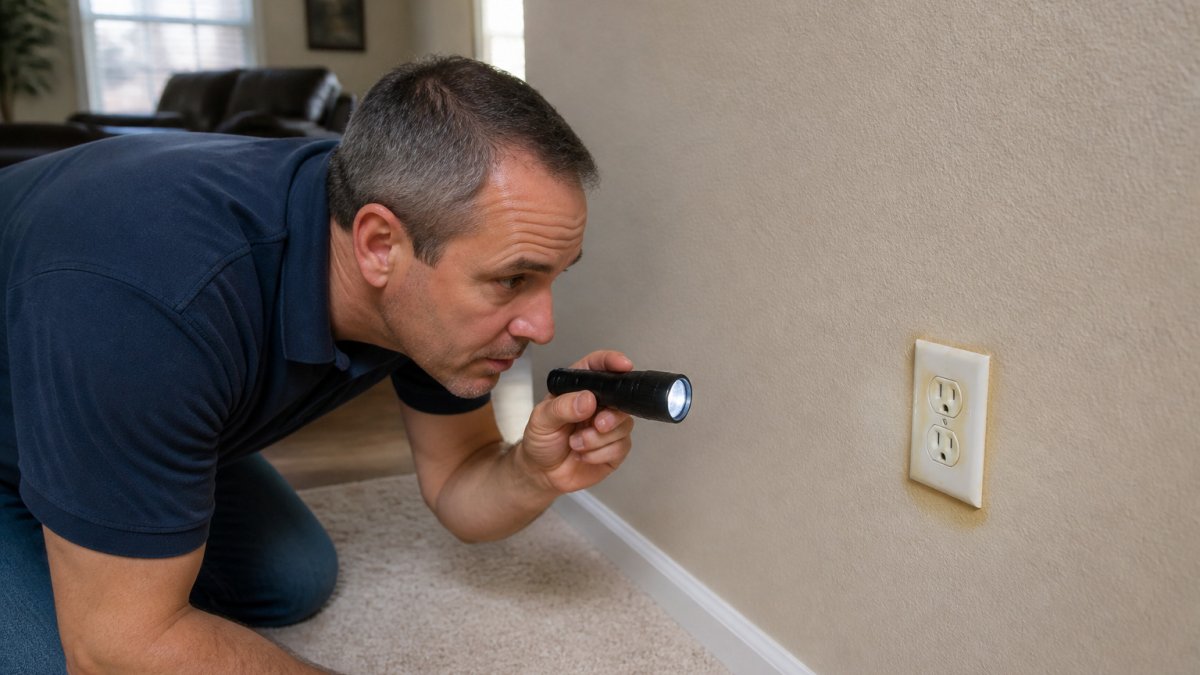
Start with the simple checks. Walk through your home and look for these warning signs:
- Lights that flicker or dim when a large appliance turns on
- Outlets that feel warm or show darkened faceplates
- A burning smell near outlets or switches
- Buzzing or crackling sounds from walls or fixtures
- Two-prong outlets with no grounding
Only do visual checks. Never open a panel or pull outlet covers yourself. Turn off the power and keep your hands clear of any live wiring. If you see scorch marks, melted plastic, or discoloration, stop and call a licensed electrician.
Watch out: A warm outlet is not a minor issue. Heat at a connection is a common start to electrical fires, so do not wait on it.
Here is a quick reference for the warning signs and the action each one calls for.
| Sign | What it may mean | What to do |
|---|---|---|
| Lights flicker or dim when a large appliance turns on | Circuit strain under load | Call an electrician |
| Outlets feel warm or show darkened faceplates | Heat at a connection | Do not wait; call an electrician |
| Burning smell near outlets or switches | Possible overheating wiring | Stop and call a licensed electrician |
| Buzzing or crackling from walls or fixtures | Loose or failing connections | Turn off power and get help |
| Two-prong outlets with no grounding | Missing ground path | Have it checked by an electrician |
Why Frequently Tripping Circuit Breakers Point to Wiring Limits
A breaker that trips once in a while is normal. A breaker that trips every week is telling you something. Your circuits may be carrying more load than the wiring can safely handle.
Older homes were built for far less electricity than we use today. Think about all the devices plugged in at once: space heaters, microwaves, EV chargers, and home offices. The wiring that worked in 1975 may struggle with that demand.
Watch for these patterns:
- The same breaker trips every time one appliance runs
- Breakers feel hot to the touch
- Lights dim whenever the air conditioner starts
Resetting the breaker again and again does not fix the cause (Commission Closes Investigation Of FPE Circuit Breakers And Provides Safety Information…). Have an electrician check the circuit and the panel.
Scheduling an Electrical Wiring Inspection and Planning Your Next Step
If you have spotted any of these signs, a professional inspection is your best next move. A licensed electrician can test circuits, check connections, and tell you whether your panel or wiring needs an upgrade. If your panel is overloaded or outdated, you can see what a panel upgrade involves.
Ask the electrician to cover these points:
- The age and type of wiring in your home
- Whether your panel can handle your current and future loads
- Which repairs are urgent and which can wait
For many homes, the choice comes down to a targeted repair or a panel upgrade. Your electrician can explain which option fits your situation. Progressive Electric LV serves homeowners across Las Vegas, Henderson, and Sun City Summerlin, and our team is fully licensed.
Frequently Asked Questions
What are the signs that my house has faulty electrical wiring?
Common signs include lights that flicker or dim when large appliances start, outlets or switches that feel warm, burning or melting-plastic smells, scorch marks or discoloration around outlets, buzzing sounds from the panel or fixtures, and breakers that trip repeatedly. Any of these warrants a call to a licensed electrician. Do not wait to see if the problem goes away on its own, because these symptoms can signal a fire hazard that grows over time.
Are flickering lights a sign of faulty wiring?
They can be. Flickering or dimming lights often happen when a circuit is overloaded or when a loose connection causes voltage to fluctuate, especially when a large appliance such as an air conditioner or refrigerator cycles on. If the flicker occurs only with one light, the bulb or fixture may be the cause. If it occurs across several rooms or with multiple appliances, have a licensed electrician check the wiring and connections.
When should I call an electrician about wiring problems?
Call a licensed electrician right away if you notice a burning smell, scorch marks, warm or hot outlets, sparking, or a breaker that trips again after being reset. For non-urgent concerns such as an older home with two-prong outlets or lights that flicker occasionally, schedule an electrical wiring inspection so a professional can assess the system and recommend repairs or upgrades.
Call Progressive Electric LV today to schedule your inspection and get your home’s electrical system checked by licensed professionals.

2 Responses